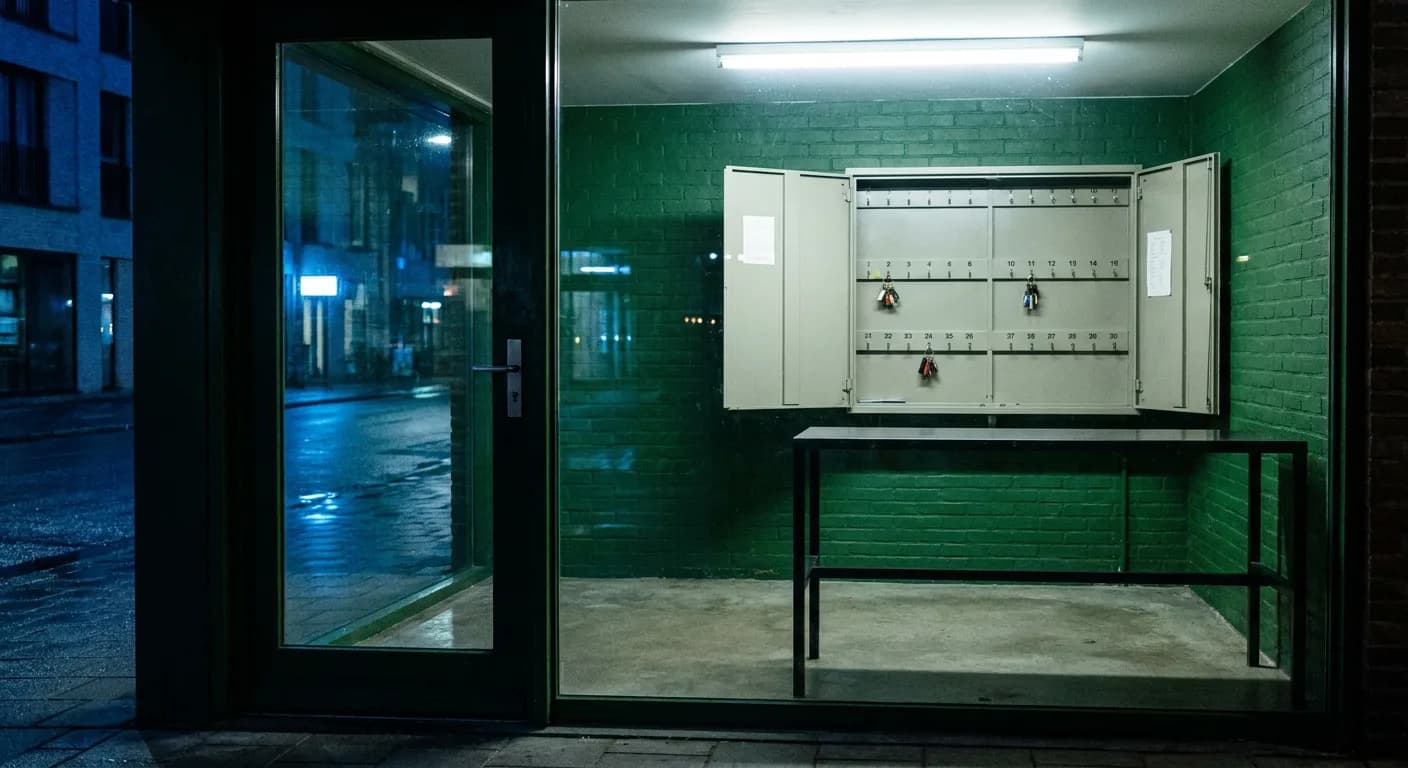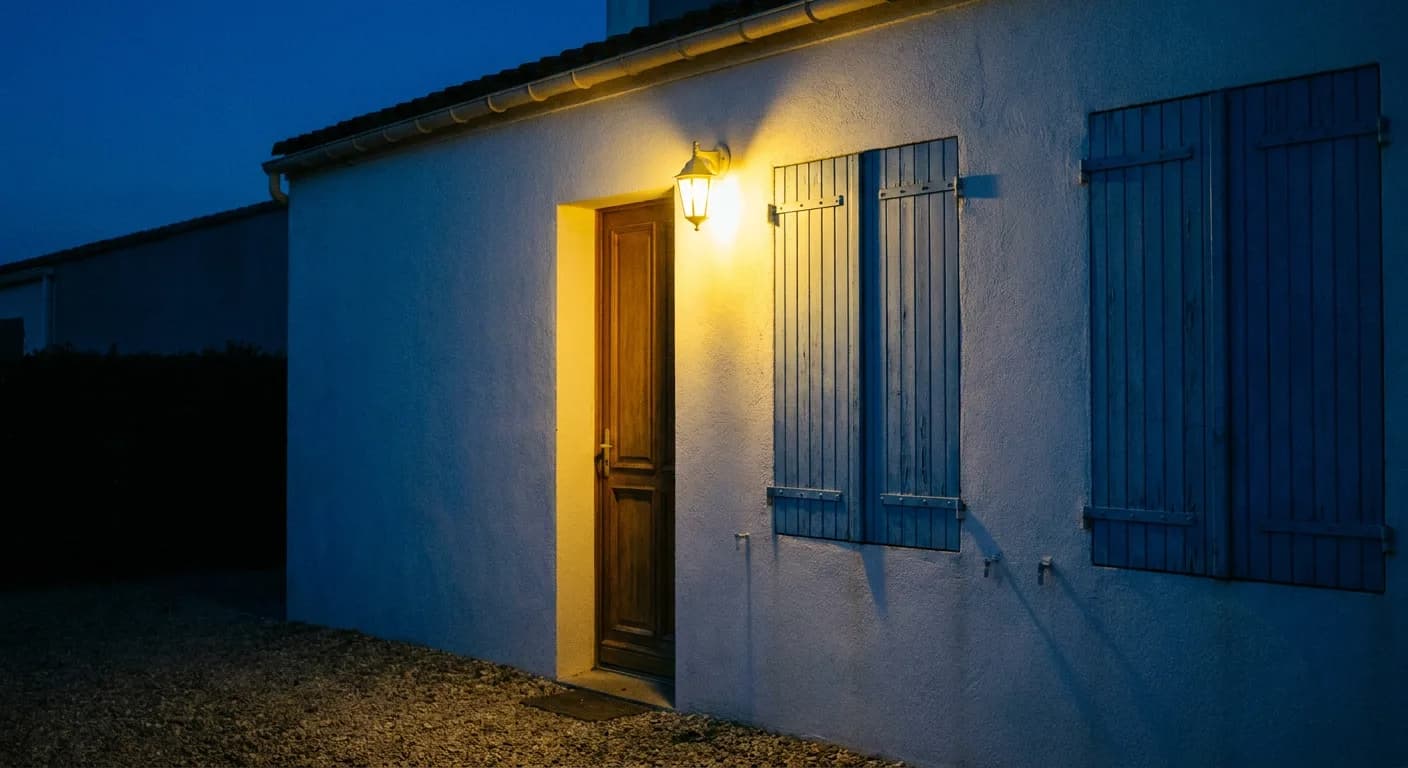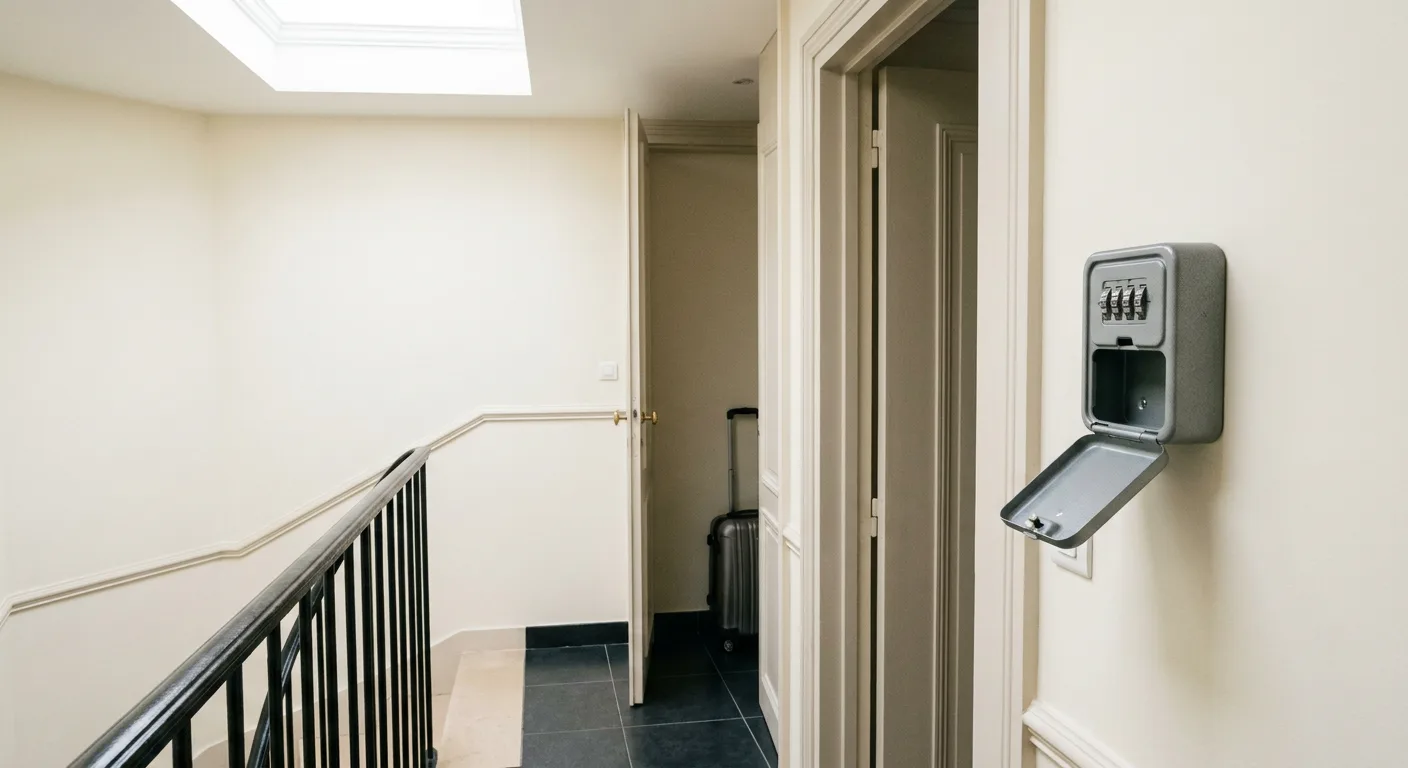
A second property does not double the work. It creates something that did not exist before: days when two things land at once. That overlap is what costs, and it can be measured.
- The measurementWhat overlap becomes from one property to three
- The lagThe 3-hour sync and the block that does not travel
- The orderWhat is written once, and what is rebuilt for every unit
What the second property actually adds
The instinct is to count properties. The right unit is the movement: an arrival or a departure. A midday departure and a late-afternoon arrival on the same date cost two interventions, not one. They are not settled with the same person either.
On a real portfolio of three properties held by one host and tracked for nine months in our database, here is how many days carry at least two movements.
Days with two movements or more, by portfolio size
- 1 property
- 20 days
- 2 properties
- 67 days
- 3 properties
- 92 days
The jump is not where people expect it. It falls between the first property and the second, where overlap is multiplied by more than three. The third adds another third, but the order of magnitude no longer moves.
154 arrivals recorded in our database across three properties of one host, over a 274-day window ·The first bar is an average: taken separately, the three properties return 13, 19 and 28 days. A single listing already has busy days, since a departure and an arrival can land together. What the second unit adds is the days when the overlap can no longer be absorbed by one person standing in one place.
The day everything lands together
Over the same window, 31 days carry two arrivals or more and two days carry three. Thirty-two days carry three movements or more, and the peak of the period is five movements in a single day. Finally, 60 of the 154 arrivals are preceded by a departure on the same date, on the same listing.
That last line decides everything else. A turnaround between two stays has no slack: a late clean becomes a late arrival, and a late arrival becomes a message at six in the evening that somebody has to read.
The calendar that runs three hours late
A portfolio rarely lives on a single platform. Calendars are then synced in the iCalendar format, and the Help Center gives the figure: your Airbnb calendar automatically updates every 3 hours and pulls in information from the other calendars you have connected.
Three hours is almost nothing on a summer stay booked six months ahead. It is a lot on a same-day night, where two guests can book the same room inside the interval.
The sync is not symmetrical. The Help Center says that nights booked on another website will be automatically blocked on Airbnb once connected, then that nights you block on another calendar may or may not be blocked on Airbnb. A booking travels, a manual cleaning or maintenance block may not. On a portfolio, it is the second half that produces the bad surprises.
Airbnb also offers rule-sets, which carry pricing discounts, availability requirements and promotions, and can be applied to a date on a listing calendar or to several dates in your multi-calendar. Once applied to a listing, a rule-set overrides the existing pricing and availability settings you had set for those dates. That is a real lever on portfolio pricing. It does not touch messaging.
What the response rate counts
The metric shown on your listings measures one precise thing: the percentage of new enquiries and booking requests you replied to within 24 hours over the past 30 days. Response time is the average time you took to reply to all new messages received over the same period. Both appear at the bottom of each of your listings.
The consequence on a portfolio is direct. A day with five movements does not only consume time: it lands while new enquiries are arriving on the other listings, each with its own 24-hour window already running. What threatens the published figure is not the monthly volume of messages. It is the day your attention is elsewhere. The hourly curve of guest messages is in the questions guests actually ask.
The order that holds as the portfolio grows
Three properties do not require three times the work of one. They require that what is shared be written once, and that what belongs to each unit be stored in the same place for all of them.
Separate what is shared from what belongs to the unit
Cancellation terms, the tone of replies and the early-arrival policy are shared. The exact door gesture, the lockbox code and the location of the meter belong to the unit. The first group is written once. The second has to be filled in for every new listing, or it will be missing on the evening it is needed.
Repeat every manual block on every calendar
A booking travels on its own. A block placed by hand may not. Deep clean, maintenance, a family stay: each manual block goes on every calendar of that unit, on the day it is decided, not the night before the stay.
Read the week in movements, not in bookings
A week with four bookings can be quiet and a week with three can be unmanageable. What counts is arrivals and departures per calendar day. Days with three movements are visible a week ahead, and that is the only moment when they can still be reorganised.
Decide who replies on those days
On the day two arrivals land together, nobody can be on site and in the inbox at once. Either a second person holds messaging, or the repetitive replies go out without you. That choice is made before the day in question, never during it.
What holding the overlap costs
Three options cover those days, on three different billing bases. The calculation starts from three properties each taking 1,500 € in rent for the month.
| Billing basis | On this month at 4,500 € | |
|---|---|---|
| Paid co-host | share of revenue | 450 € at 10 % |
| Management company | share of revenue, field work included | 900 € at 20 % |
| Sentioo | flat fee per property | 29.70 € excl. VAT for the three, tapering from the third |
The three do not do the same job. A management company sends somebody to reset the property, a tool does not. So the useful question is not which is cheapest, but what is left to do once paid on a five-movement day. The scope of each is set out in what a management fee actually covers.

 Three ways to hold a portfolio inbox
- CopiloteThe reply is drafted and waiting for you. You read it, correct it, send it. Useful while your per-property instructions are still moving.
- HybrideReplies go out on their own during your hours. Control returns to you outside them, and on heavy-overlap days in particular.
- AutopiloteThe reply goes out on its own. Anything outside the known scope comes back to you rather than being invented, property by property.