Six Airbnb message templates to copy, each with its send time, the length that works and the operating rule it has to respect.
·10 min
Six messages cover the whole stay. Each one has a moment, a length and an operating rule. Those three constraints are what separate a sequence that cuts questions from one that only adds notifications.
Message
Sent
Length
What it must carry
Confirmation
Immediately
50 to 75 words
The dates, the promise of what comes next
Arrival instructions
D-3
100 to 150 words
Address, access, window, wifi
The code
Arrival day, morning
30 words
The code, alone
Mid-stay
+18 h after arrival
25 to 50 words
One open question
Day before departure
The evening before
50 to 100 words
The time, two or three gestures
Review
D+3 after departure
30 to 60 words
Nothing to ask twice
Brackets mark the dynamic fields. Replace them with the fields from your platform or your PMS.
ConfirmationImmediately50 to 75 words
Hello first name, your booking is confirmed from arrival date to departure date.
I will write three days before you arrive with the exact address, how to get in and the wifi. Until then this conversation stays open.
See you soon.
Silence after a booking makes people uneasy. This message only says someone is there. Announcing when the information will arrive removes the follow-up from careful guests.
Arrival instructionsD-3100 to 150 words
Hello first name, your stay is coming up. Here is everything you need to get in.
Address: address
Floor floor, door door
Check-in from check-in time, checkout before checkout time
Access: access method. The code will reach you on the morning itself.
Wifi: network, password password
Parking: parking instructions
One thing from your side: roughly what time do you expect to arrive? An estimate is enough.
See you very soon.
The message to get right first. It is the only point in the stay where the guest is actively looking for detail, so the only one where a long message is read in full. Every line missing here comes back as a question the evening before.
The codeArrival day, morning30 words
Hello first name, here is the entry code: code.
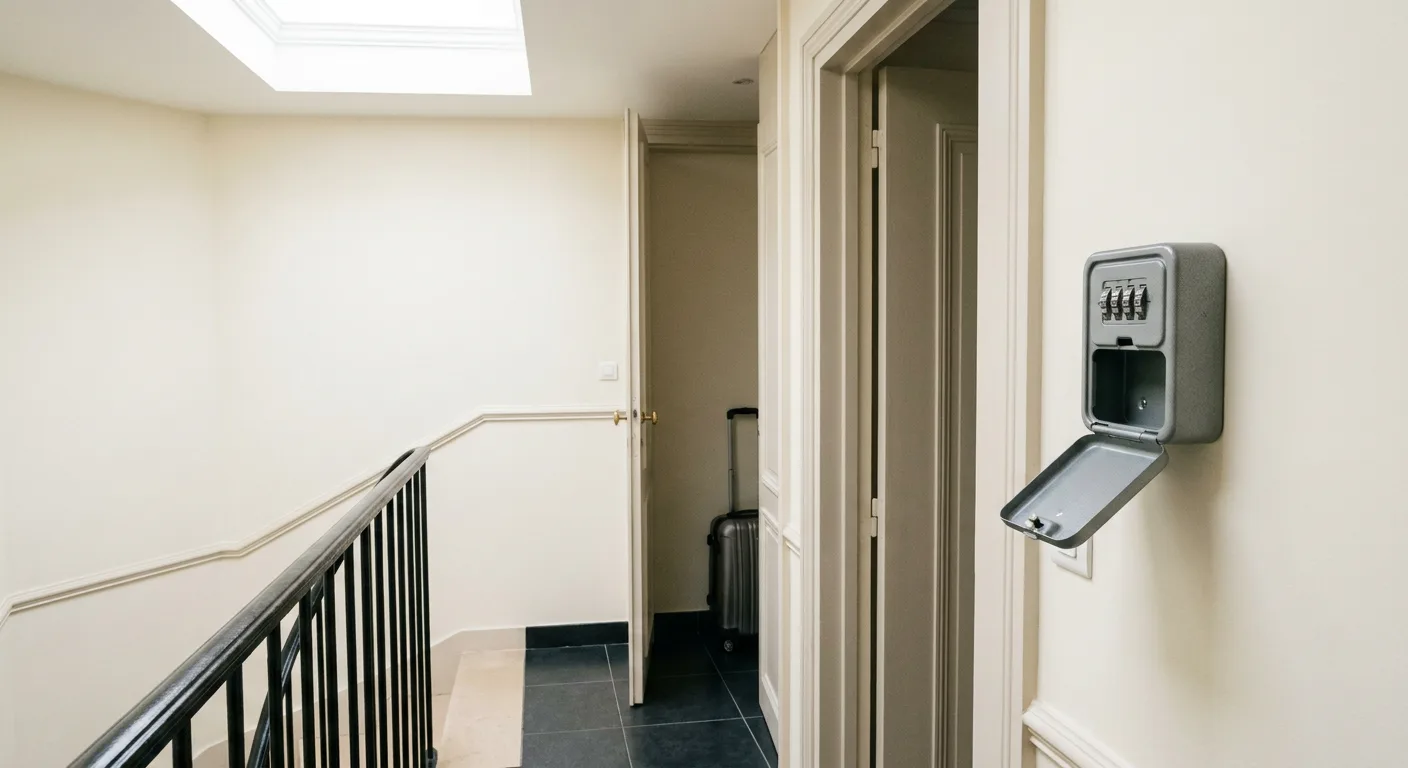
The keybox is keybox location.
Safe travels.
Alone in its own message, and on the day itself. A code sent three weeks ahead ends up buried under the exchanges that followed. Nobody scrolls back through a conversation in front of a locked door: they write.
Mid-stay+18 h, from 3 nights25 to 50 words
Hello first name, is everything alright at the flat?
If something is missing or not working, tell me now: I still have time to act.
The day after arrival, not halfway through the stay. A problem raised on day one gets fixed; the same problem discovered in the review cannot be. Disable it below three nights: on a two-night stay it lands while the guest is out.
Day before departureThe evening before50 to 100 words
Hello first name, checkout is tomorrow before checkout time.
Three things only:
· start the dishwasher
· leave the keys key return instructions
· close the door behind you
Nothing else, the cleaning team handles the rest.
If you need to leave later, tell me tonight and I will see what is possible.
The evening before, never on the morning itself: while packing, a message gets skimmed. Three gestures maximum, and say plainly that the rest is not their concern. A list that reads like housework ends up in the review.
Review requestD+330 to 60 words
Hello first name, thank you for taking such good care of the flat.
I have left my review on my side. If you enjoyed the stay, yours helps the next guests decide.
Hope to welcome you again.
Three days later, not on departure day: the guest gets home, unpacks and is not thinking about the stay yet. Saying your review is already posted turns the ask into reciprocity. One follow-up, never two.
The last-minute booking breaks the sequence. Someone books two days before arrival: the confirmation, the D-3 instructions and the morning code all go out on the same day. Four notifications in a few hours, two of which contradict each other about what the guest will get later. The fix is mechanical. Below three days between booking and arrival, one single message merges the confirmation and the instructions. The remaining scheduled sends are disabled. Most tools expose that gap as a trigger condition: in Beds24 it is the Between Booking and Check in field, covered in setting up Auto Actions.
A template goes out on time with text decided in advance. It does not read the thread. Once the guest replies, the sequence has nothing left to offer.
Camille R.Airbnb9 → 12 SeptemberCopilote
Arrival-day message, sent at 9:00
Thanks! Is the parking behind the building accessible with a van?11:24
The car park is underground, height limited to 1.90 m. For a van, the parking on place Carnot 200 m away is free after 7 pm.11:24
The template did its job. The question that follows fits no template: it depends on what was just written.
The six templates settle punctuality. They do not settle the unforeseen. The guide to Airbnb automated messages covers what comes next when the conversation continues.
Each template in detail: length, fields and reading order
Why the confirmation stays under 75 words
This message carries nothing. Its job in the sequence is narrow: say that someone is there, then say when the useful information will arrive. Anything added lands at a moment the guest has no use for it, so it is forgotten and asked again three days later. The length is not a style constraint. It is an attention constraint: a short message sent right after a booking gets read in full. That is the only thing asked of it.
Square brackets are not a universal syntax
Every platform and every PMS has its own set of dynamic fields and its own writing convention. Beds24 uses capitals such as [GUESTSFIRSTNAMES], Smoobu uses lowercase names such as [firstGuestName]. Platform extranets have theirs. The brackets used on this page are writing markers, not codes to copy across. The practical rule: write the text once, then replace the fields by hand inside the tool that will actually send it.
What a mistyped field does to the guest
Nothing breaks. That is exactly the problem. A code the tool does not know is neither resolved nor removed: it reaches the guest as written, brackets included, in the middle of an otherwise normal sentence. The quieter case is a valid field with no data behind it, when the information was never filled in. Some tools then print a phrase such as "not available" in plain text. A preview shows neither case. Only a test send on a real booking does.
The fold decides what is read
A message is read on a phone, first in a notification then in a narrow thread. The first three or four lines are seen. The rest takes a deliberate gesture. That imposes an order: what answers the question of the moment first, what refines it second, never the reverse. House rules pasted at the top of an arrival message push the address and the code below the fold. They produce the exact question they claimed to prevent.
The code travels alone, on the day itself
An entry code sent alongside ten other details three weeks ahead ends up buried under everything that followed. Nobody scrolls back through a conversation in front of a locked door, after dark, holding a suitcase. So the code deserves its own short message on the morning of arrival. It works far better with a physical landmark than with an address: "the box to the right of the gate, under the intercom" can be found. "keybox" cannot.
Mid-stay only makes sense from three nights
On a two-night stay, a message sent eighteen hours after arrival lands while the guest is out. It arrives too late for anything to be fixed before checkout and adds a notification without opening an action. From three nights, the maths flips: a problem raised on day one can still be fixed; the same problem discovered in the review cannot. It is the only duration condition in the whole sequence that genuinely earns its place.
Three gestures at checkout, and say the rest is not theirs
A departure list longer than three items reads as housework and ends up quoted in the review. Wording matters as much as the count: stating plainly that the cleaning team handles the rest turns the same list into consideration. The other commonly missed setting is the send time. The evening before, the message is read. On the morning itself, between suitcases and a train, it is skimmed. The one instruction that mattered is the one that gets skipped.
The review request works on reciprocity, not persistence
Three days after checkout the guest is home and unpacked, thinking about the stay for the first time. On departure day they are still in transit. The lever is not insistence but the fact that your review is already posted: the ask becomes an exchange rather than one more favour. Platforms cap the review window, which leaves room for one follow-up and exactly one. The second reads as pressure.
The cutting test, applied sentence by sentence
Three questions per sentence are enough. Does it give information expected right now? Does it ask the guest for an action? Does it head off a frequent question? If all three answers are no, the sentence goes. The test almost always removes the same material: the house rules again, the amenities already visible on the listing, permanent availability promises and stacked politeness. What survives fits the lengths in the table on this page.
Read the whole sequence against a two-night stay
The check that finds the most defects is not about one template but about their order. Take a short stay booked shortly before arrival then write out the six sends with their real dates and times. Two problems show up nearly every time: two messages landing on the same day and contradicting each other about what comes next; a mid-stay message with nowhere to sit. Fixing the order costs a few minutes. Fixing the impression left costs a review.
Frequently asked questions
What happens when a guest books three days before arriving?
Without a safeguard, the confirmation, arrival instructions and day-before message all go out on the same day: four notifications in a few hours. The rule is to merge the confirmation and instructions into one message as soon as the gap between booking and arrival falls below three days, then turn off the scheduled sends that no longer apply.
How long should each message be?
Confirmation and mid-stay messages stay under 75 words. Arrival instructions can go to 150: this is the one message where the guest is actively looking for detail. After that, the end of the message stops being read, and what is not read gets asked again.
Do templates need to differ by platform?
The text stays the same, but the dynamic fields do not: each platform has its own syntax and its own set of variables. A template copied across as is will show unresolved tags to the guest.
Sentioo adapts your scheduled messages and handles the replies behind them, in your tone, from the property knowledge base. You pick the mode, property by property.